Before you choose the island
When to Visit Zanzibar, Month by Month
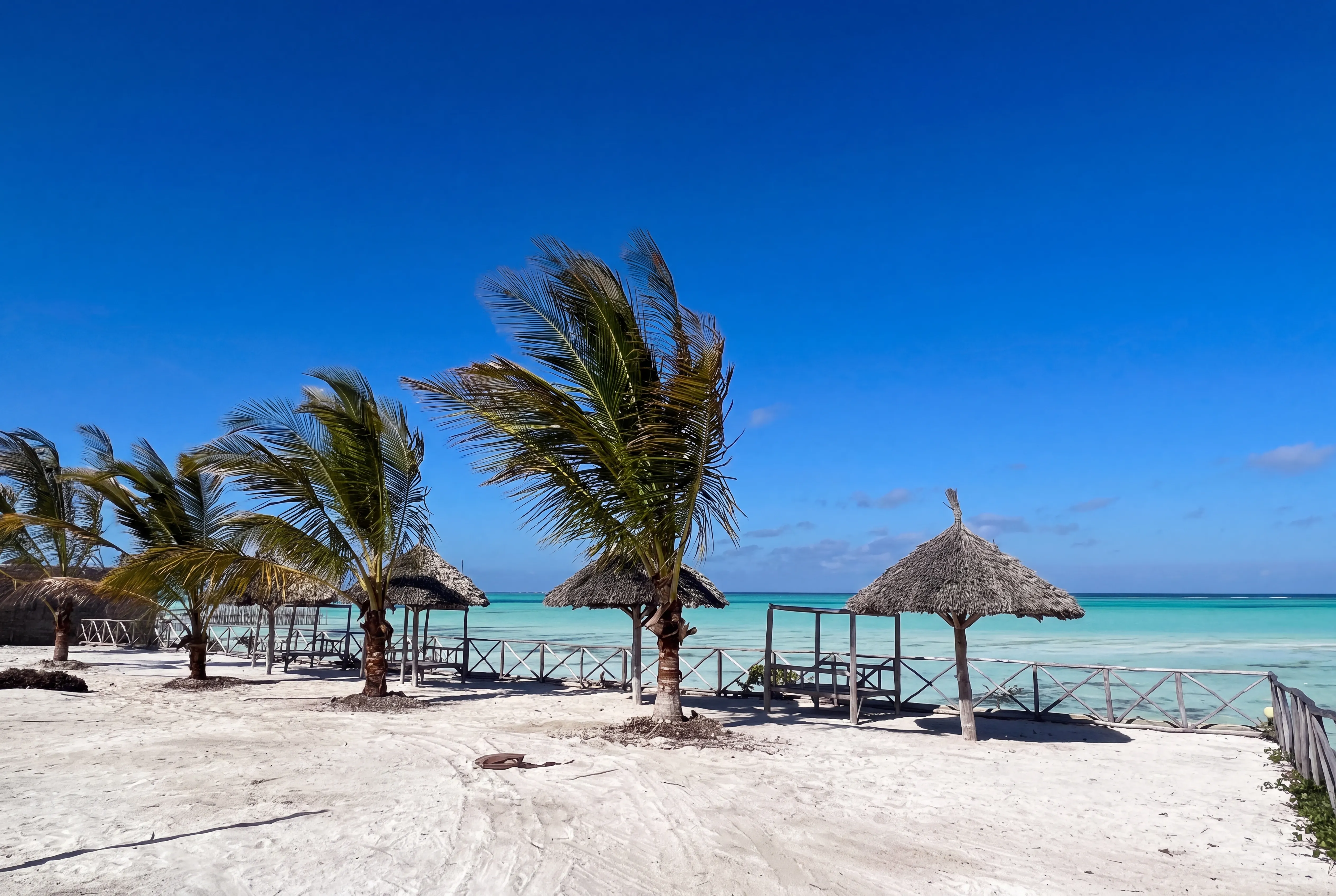
Zanzibar is warm every month of the year. Daytime temperatures sit between roughly 26°C and 33°C in January and in July alike, and the sea never drops below about 25°C. What changes is rain, wind, and how many other people are on the beach.
June to October is dry, cooler and breezy — the main season. January and February are hot, still and clear, with the best water visibility of the year. March to May is the long rainy season, when parts of the island close and prices fall sharply. November brings shorter, lighter rains and some of the best value on the calendar.
There is no wrong month. There are months with trade-offs, and the point of this guide is to help you choose which trade-off you want.
The two winds
Zanzibar’s year is shaped by two monsoons, and once you know them the rest of the calendar explains itself.
The kaskazi blows from the north-east, roughly December to March. Hot, still, humid, calm seas. This is the clearest water of the year and the best diving.
The kusi blows from the south-east, roughly June to September. Cooler air, steady wind, choppier water on the east coast. It is why Paje’s kitesurfing peaks in these months, and why July on the east coast feels fresh in a way February does not.
Between the two sit the rains.
The rains, honestly
The long rains (masika), March to May. The wettest stretch, with April heaviest — Zanzibar can see 300 to 400 millimetres in that month alone. It does not rain all day; the pattern is heavy afternoon downpours with sun between them. But it rains enough that outdoor plans stop being reliable, humidity is high, and many places close for part of this period. Those that stay open charge far less.
The short rains (vuli), November into early December. Much lighter. Showers tend to be brief and usually late in the day, and they rarely cost you a whole day. November is quietly one of the island’s best-value months: prices are still low and the crowds have not arrived.
Month by month
| Month | Weather | Sea & wind | Crowds | In one line |
|---|---|---|---|---|
| January | Hot, humid, mostly dry | Calm, clear | High | Peak season, peak prices; some seaweed east |
| February | Hottest, dry | Calm, best visibility | High | The diving month; some seaweed east |
| March | Hot, rain building | Turning unsettled | Falling | Fine until mid-month |
| April | Wettest | Unsettled | Very low | Many closures, lowest prices |
| May | Rain easing | Unsettled | Very low | Green, empty, cheap |
| June | Dry, cooler, breezy | Kusi builds | Rising | The season opens |
| July | Dry, cool, windy | Kusi steady | High | Kitesurfing weather |
| August | Dry, cool, windy | Kusi steady | High | European holidays, busiest beaches |
| September | Dry, warming | Kusi easing | High | Widely considered ideal |
| October | Dry, warm | Calming | Moderate | Our own favourite |
| November | Short rains | Calming | Low | Best value on the calendar |
| December | Rains ease, heat builds | Kaskazi begins | Rising sharply | Christmas is peak |
Sea temperature stays between roughly 25°C and 29°C all year. February brings the warmest air, July the coolest — and “coolest” here still means shorts.
Choosing by what you came for
For reliable sun and a straightforward beach holiday: June to October. September and October are the sweet spot — full dry season, and the August rush has gone home.
For diving and snorkelling: January and February. The kaskazi flattens the sea and visibility around Mnemba Atoll is at its best all year.
For kitesurfing: June to September, when the kusi is steady. Paje is the centre of it.
For a safari combination: June to October lines up with the dry season in northern Tanzania and with the migration river crossings in the Serengeti. This is why so many trips are built around these months, and why the island is busiest then.
For a honeymoon: the shoulders — October, or February. Warm, settled, and without the August or Christmas crowds.
For the island almost to yourself: late May, or November. You accept some rain. In return you get a beach with nobody on it and prices that make a longer stay possible. Some of our most contented guests come in these months on purpose.
What about the seaweed?
This is one of the most-searched questions about Zanzibar’s east coast, and the answers online contradict each other, so here is a straight one.
Two different things get called seaweed here, and confusing them is where most of the online confusion comes from.
The farms. Seaweed farming has been a real industry on this coast since around 1989, and Zanzibar is now one of the world’s larger exporters. It is largely women’s work — roughly four in five farmers are women — and it is one of the most significant sources of independent income in the east coast villages. At low tide you will see the rows staked out on the flats in neat lines, and the harvest drying in the sun on racks near the houses. It is grown for carrageenan, the thickener in everything from toothpaste to ice cream, and the cycle from planting to harvest takes about six weeks.
This is not a blemish on the beach. It is one of the more interesting things about this coast, and it is the reason the villages here have kept their own economy rather than living entirely off tourism.
The loose seaweed. What visitors usually mean, though, is the material that washes up on the sand. This is a mix of drifting algae and seagrass, and it is entirely natural — it is not pollution and it does not smell of anything except sea.
How much arrives depends on wind and current, which means it moves with the monsoon. On the east coast it is generally most noticeable during the kaskazi, roughly December to March, when the north-easterly wind pushes drifting material onto the shore. During the kusi months from June to October the east coast is usually cleaner, though windier. It also varies considerably between one stretch of coast and the next, sometimes within a single kilometre — which is why online accounts of “seaweed season” contradict each other so often.
In practice, on the hotel frontages along this coast it is cleared regularly and you will rarely find it an issue. On the wilder stretches between villages, it comes and goes with the wind. If you are the kind of traveller for whom a photograph of an entirely bare beach is essential, the north-west coast has less of it — but it also has considerably more people standing on it.
Ramadan
Zanzibar is overwhelmingly Muslim, and Ramadan shifts about eleven days earlier each year. In 2027 it falls roughly from early February to early March; in 2028, from late January to late February. Exact dates depend on the sighting of the moon and are confirmed only shortly beforehand.
During the month, many local restaurants outside hotels close during daylight hours and the island is noticeably quieter. Hotels serve guests as normal.
It is not a reason to stay away — some travellers prefer the calm, and the evenings after sunset are a genuinely lovely thing to witness. But it is worth knowing before you book. Modest dress in the villages is appreciated at any time of year, and costs you nothing.
The month we would pick
If someone asked us to choose one month knowing nothing else about them: October.
The rains are long gone. The kusi has softened, so the wind drops but the air stays fresh. The water is warming back up. The August crowds have flown home. And the beach in front of the village is wide, quiet, and — for a few weeks — very nearly yours.
But the honest version is that the worst month here is still warm, still beautiful, and still better value than most places you would compare it to. The question was never whether to come.