Before you choose the island
Where to Stay in Zanzibar: An Honest Coast-by-Coast Guide
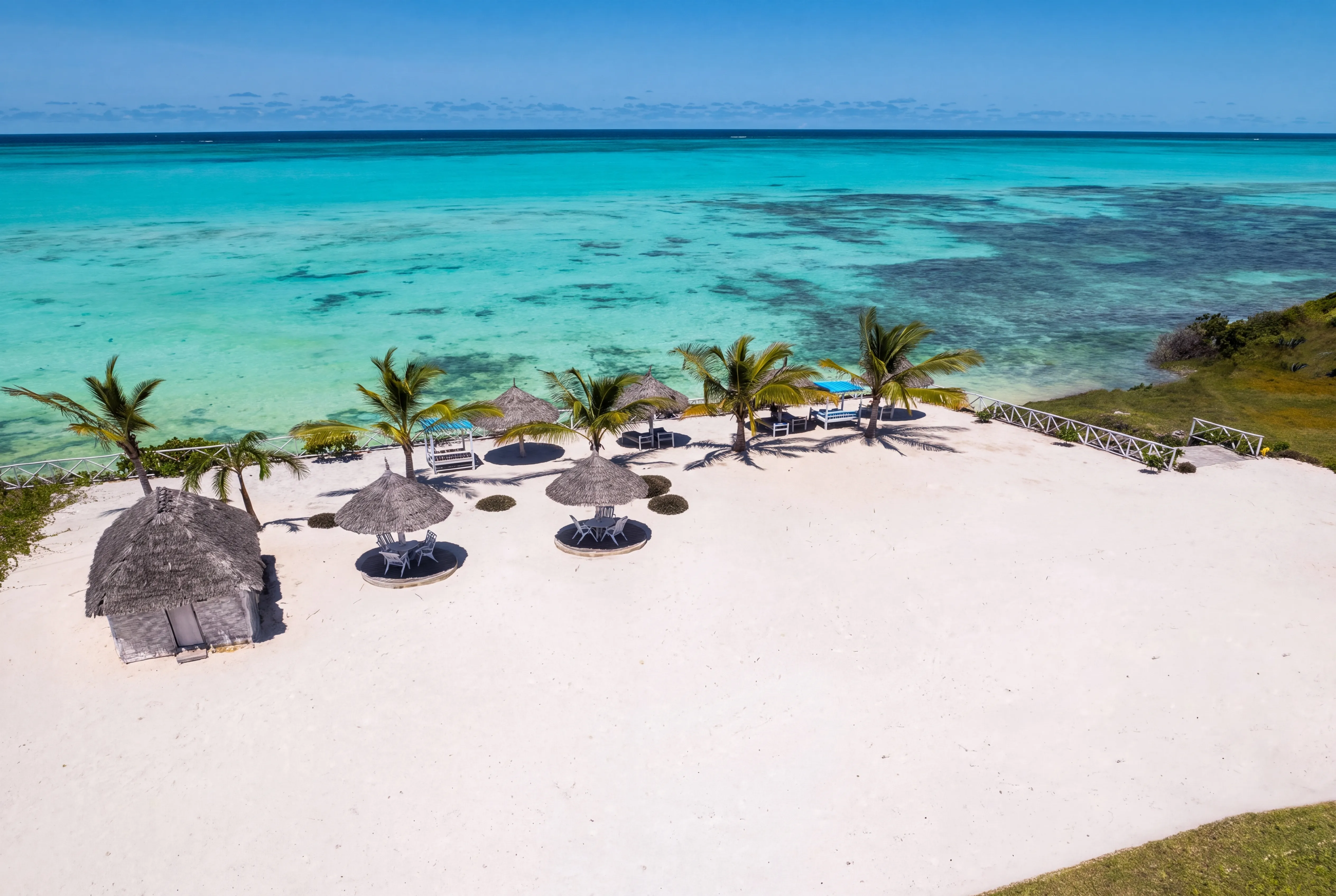
Zanzibar is not one beach. It is an island 85 kilometres long with six distinct areas, and the difference between them is larger than almost any first-time visitor expects.
The north-west — Nungwi and Kendwa — has deep water all day, the most hotels, and the most people. The east coast has a dramatic tide, far more space, and costs meaningfully less. Paje is the kitesurfing centre. Jambiani, four kilometres further south, is a quiet fishing and seaweed-farming village. Matemwe is secluded and upmarket. Stone Town is not a beach at all.
Most people book the north because it appears first. Whether that is right for you comes down to a single question.
The one question that decides it
Every other consideration — price, atmosphere, space, food — follows from this:
Do you want the sea at your feet at every hour of the day, or do you want space?
You cannot have both on Zanzibar. This is not about hotel quality or budget. It is geology.
The east and south-east coasts sit behind a coral reef that holds a shallow lagoon. Twice a day that lagoon drains and the water line moves several hundred metres out. In exchange you get an enormous beach, a working village instead of a resort strip, water the colour of a swimming pool at high tide, and prices roughly a third below the north.
The north-west has no lagoon and a small tidal range of under a metre. The water stays deep and close from breakfast to sunset. In exchange you get the busiest coastline on the island: hotels shoulder to shoulder, beach vendors, jet skis, and a beach that in August is genuinely crowded.
Neither answer is wrong. Answering it wrongly is the most common Zanzibar booking mistake, and it is entirely avoidable.
The six areas
- NungwiThe busy north — deep water all day
- KendwaThe sunset coast, calmer than Nungwi
- MatemweSecluded, upmarket, facing Mnemba
- PajeThe kitesurfing capital
- JambianiThe quiet south-east — where Raffia is
- Stone TownThe historic west, not a beach
Nungwi — the busy north
The northern tip, and by a wide margin the most developed part of the island. Nungwi has the greatest concentration of hotels, restaurants and bars on Zanzibar, real nightlife, and almost no tidal range.
It is the safe choice, and for some travellers the right one. If this is your first time in East Africa, if you are travelling as a group, or if consulting a tide chart before swimming sounds like work, Nungwi delivers what it promises.
Before you book it, know this: the beach is shared with a great many other people. Vendors approach often. The fishing village that gave Nungwi its name has largely been replaced by the industry around it. And at roughly $150–400 a night for a comfortable double, it is the most expensive stretch on the island.
Kendwa — Nungwi’s quieter neighbour
A few kilometres south-west, on the same deep-water coast. Calmer than Nungwi, and facing west — which makes it the island’s sunset coast. That is a real advantage, since most of Zanzibar’s beaches face east and never see one.
Kendwa is also known for full-moon parties that draw crowds from across the island. Whether that reads as a feature or a warning tells you something useful about yourself.
Matemwe — the secluded north-east
A long, quiet stretch facing Mnemba Atoll, the island’s best diving and snorkelling. Fewer properties, more space between them, and the highest average prices on the island — comfortably $200 a night and often far more.
Suits divers, honeymooners, and anyone willing to pay for seclusion. The tide behaves like the east coast here too, but few people choose Matemwe for the swimming.
Paje — the kitesurfing capital
On the east coast, and completely defined by one activity. The shallow lagoon that makes swimming tidal makes kiting exceptional, and Paje has filled with kite schools, instructors, young travellers and an informal beach-bar scene. Expect roughly $70–200 a night.
If you kite, there is nowhere better in the Indian Ocean.
If you do not, picture the beach honestly: on a good wind day between June and September the sky in front of Paje is full of kites and the water is full of lessons. The quiet stretch of sand you had in mind is four kilometres further south.
Jambiani — the quiet south-east
A working village strung along several kilometres of white sand. Houses, small shops, painted fishing boats pulled up on the beach, women farming seaweed on the flats at low tide, and hotels mixed in among all of it rather than walled off from it. There is no resort strip here, because the village is the seafront.
The tide is what people remember. At high water the lagoon is flat, warm and pool-coloured, and you swim straight off the sand. At low water the sea walks several hundred metres out and leaves a plain of firm white sand, warm tidal pools and seagrass, with the reef breaking in a white line on the horizon. Guests who arrive braced to be annoyed by this are usually the ones still out there at six in the evening.
Prices run roughly $80–230 for a good double — the best value on the island by a clear margin.
What you should know: there is no nightlife. Dinner is at your hotel or one of a handful of village places. If you want twenty restaurants within walking distance, this is not your coast.
Stone Town — the historic west
Not a beach destination, and it should not be treated as one. Stone Town is the island’s historic heart: coral-stone buildings, carved doors, spice markets, and Swahili, Omani, Indian and European history stacked on top of each other. A UNESCO World Heritage site, and worth one or two nights.
It sits about fifteen minutes from the airport, which makes it the natural bookend at either end of a trip.
At a glance
| Area | Character | Swimming | Nightlife | Typical double |
|---|---|---|---|---|
| Nungwi | Busy, developed | All day | Yes | $150–400 |
| Kendwa | Resort, sunsets | All day | Some | $130–350 |
| Matemwe | Secluded, upmarket | Tidal | Minimal | $200–500 |
| Paje | Young, kitesurfing | Tidal | Yes | $70–200 |
| Jambiani | Quiet village | Tidal | Minimal | $80–230 |
| Stone Town | Historic town | No beach | Some | $60–200 |
Prices are indicative for a comfortable mid-range double in high season and move considerably between seasons. Low season across the island can be half of these figures.
How to structure a week
Zanzibar rewards staying put. The island is small enough that day trips reach almost anywhere, and moving hotels mid-stay costs you the better part of two days.
For most stays of seven to ten nights: one or two nights in Stone Town at the start — the old town, the night market, time to adjust — and the rest on one beach.
If you are arriving from a mainland safari, as a large share of visitors do, this matters more than usual. After a week of five-thirty starts and long drives across the Serengeti, the beach is the point at which you stop moving. That argues hard for a quiet coast. Travellers who book Nungwi straight off safari often find they have traded one kind of intensity for another.
Choosing, in one paragraph
Want a lively resort holiday with swimming at any hour and a bar within walking distance? Book Nungwi or Kendwa and enjoy it.
Kite? Book Paje.
Dive, and can afford it? Book Matemwe.
And if what you actually want — which a surprising number of people work out only after they arrive — is a wide, quiet beach, a village going about its own business, warm water at high tide, and the sound of the sea instead of the bar next door: book the south-east.
Where we are
Raffia is in Jambiani, on that south-east coast. Everything written above about it applies to us — the tide, the village, the quiet.
We have twelve rooms. Not a hundred and twelve. The beach in front of us is the same beach the village uses, and at low tide you can walk it for an hour in either direction without running out.
We will not pretend this suits everyone. If you want the sea at your feet at four in the afternoon and somewhere loud to eat at nine, Nungwi will make you happier than we will, and we would rather you knew that now than on day two.
But if you have read this far and the south-east is the part you kept picturing — that is the coast we chose too.