Choosing the kind of place
What Makes a Zanzibar Hotel Romantic
Almost every hotel on this island describes itself as romantic. The word has been used so often here that it has stopped meaning anything, and the photographs are no help either — rose petals on a bed look the same in a twelve-room guesthouse as in a four-hundred-room resort.
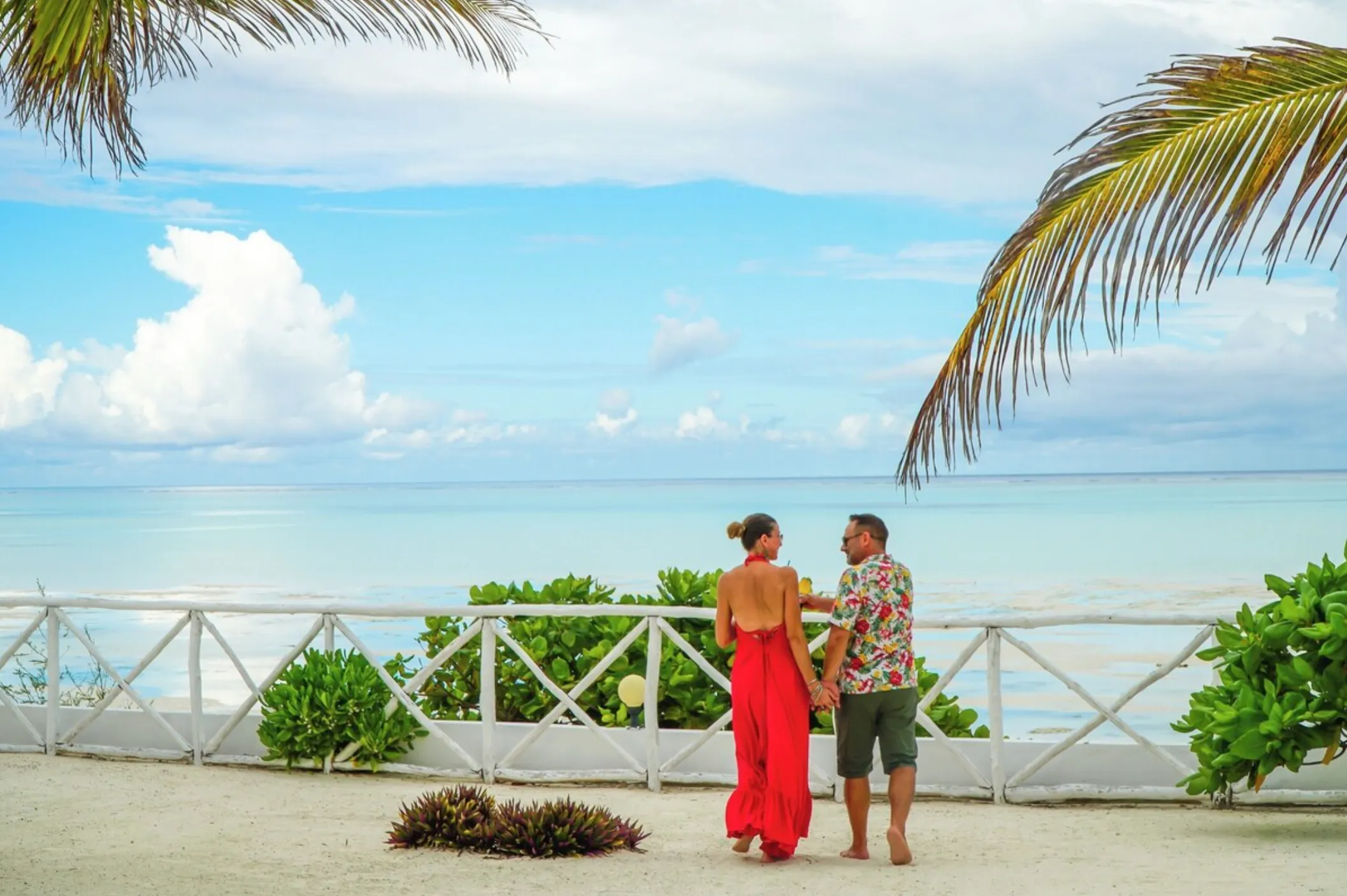
So here is what actually changes the experience, and what does not.
What matters: privacy at your own room, dining that is cooked rather than assembled, a beach with space on it, and quiet after ten o’clock. What does not: four-poster beds, the word “intimate” in the description, and turndown chocolates.
And one thing almost nobody tells you before you book: on Zanzibar’s east coast, the sun rises out of the ocean and sets behind you. If you have been picturing sundowners over the water, that is the north-west coast, not this one.
The sunrise problem
Zanzibar sits about six degrees south of the equator, which means sunrise and sunset barely move through the year — first light around a quarter past six in the morning, dark again a little after six in the evening, give or take half an hour depending on the month.
What does change is which coast you are on.
- East and south-eastPaje, Jambiani, Michamvi. The sun rises straight out of the ocean and sets behind you, over the palms and the village. This is where Raffia is.
- North-westNungwi and Kendwa. The sunset happens over the water — which is where the honeymoon photographs come from — and the sun rises behind the island.
The east and south-east coasts — Paje, Jambiani, Michamvi — face the open Indian Ocean to the east. You get sunrise directly over the water, which on a clear morning is the single best thing about staying here. The sun then tracks overhead and goes down behind the island, over the palms and the village.
The north-west coast — Nungwi, Kendwa — faces west. That is where the sunset-over-the-sea photographs come from, and it is a genuine advantage of that coast.
Neither is better, but they are not interchangeable, and honeymoon marketing sells the second while a great many honeymooners book the first. If a sundowner over the sea is the image you have been carrying, book the north-west and enjoy it. If you are willing to trade it for a wide, quiet beach and a sunrise almost nobody else is awake for, the east coast is the better holiday.
What actually makes a room romantic here
Not the furniture. Four-poster beds and carved Zanzibari headboards are near-universal on this island — they are the local style, not a luxury signal, and you will find them at every price point.
What changes the experience is much duller to describe and much more noticeable to live with.
A private outdoor space that is genuinely private. There is a large difference between a balcony overlooking a lawn that everyone crosses and a terrace enclosed by a wall or planting. Ask what is on the other side of the terrace, not how big it is.
Air conditioning that works, and a good mosquito net. Unromantic, decisive. It is hot here, and the difference between sleeping well and not sleeping is the whole holiday.
Distance from the bar and the generator. Small properties usually have both closer than large ones. Ask which rooms are furthest from each.
Where the room sits relative to the sea. “Sea view” on the east coast can mean a full frontal view or a glimpse between palms. It is worth asking for a photograph taken from the room itself rather than from the garden.
What actually makes a hotel romantic here
Dining that is cooked to order. This is the clearest dividing line on the island. At a large all-inclusive, dinner is a buffet built for hundreds; at a small property it is a short menu, often built around what the boats brought in. Neither is right or wrong, but only one of them feels like an evening rather than a queue.
A beach with space on it. Romance is mostly a function of how far away the nearest other towel is. This is more about hotel size and coast than about anything the hotel does — see our piece on twelve rooms or two hundred.
Staff who recognise you by the second day. At twelve rooms this is inevitable. At two hundred it is impossible, however good the training.
Quiet at night. On the east coast this is nearly guaranteed outside Paje. In Nungwi and Kendwa it is not, and full-moon party nights carry a long way over water.
When a big resort is the better choice
We are a small hotel, so take this as an argument against our own interest.
If either of you wants a spa treatment menu rather than a massage, a choice of four restaurants rather than one, a gym, a dive centre on site, a pool big enough to swim lengths in, or something to do when it rains for a day — a large resort will make you happier than a small one.
Honeymoons are also often the one trip where people want to be looked after completely rather than to explore. All-inclusive exists for that reason and it does the job well. If that is the holiday you want, the north-west coast has the best of them, and you should book one.
The small-hotel case is for a different kind of trip: quieter, plainer, more time in each other’s company and less programme.
Questions worth asking before you book
Whatever property you are considering, these five get you further than any amount of browsing.
-
Is the terrace or balcony overlooked, and by what?
Ask for a photograph taken from inside the room, not from the garden.
-
How many rooms, and how many metres of beach?
The ratio tells you more than either number alone.
-
Is dinner a buffet or a menu?
And is the restaurant open to non-residents?
-
What is the nearest source of noise at night?
A bar, a road, a generator, or a neighbouring hotel.
-
Which coast, and therefore sunrise or sunset?
See the drawing above. It is the question fewest people think to ask.
Any hotel that answers these plainly is probably worth staying at. Any hotel that answers with adjectives is telling you something too.
Where we sit
Raffia is twelve rooms on the south-east coast, in Jambiani. That means sunrise over the water, a quiet village rather than a resort strip, a restaurant that serves house guests only, and a beach wide enough that at low tide you can walk for an hour without running out of it.
We do not sell numbered honeymoon packages. If you are coming for a honeymoon or an anniversary, tell us when you book and we will put something together with you — it is a small enough place that this is a conversation rather than a menu.
It also means no spa list, no choice of restaurants, and nothing happening after dinner. On a honeymoon, some couples find that is exactly the point, and others discover on day three that they wanted more going on. We would rather you knew which of the two you are.
If you have read this far and the quiet version is the one you kept picturing, you have chosen your coast.
Still choosing between coasts? Read Where to Stay in Zanzibar. Deciding when to come? When to Visit Zanzibar, Month by Month. Weighing a small hotel against a resort? Twelve Rooms or Two Hundred.